





The National Clearinghouse for Worker Safety and Health Training is a national resource for hazardous waste worker curricula, technical reports, and weekly news on hazardous materials, waste operations, and emergency response. Funded by the NIEHS Worker Training Program (WTP), the National Clearinghouse provides technical assistance to WTP staff, grant recipients, and the general public.
For more information on the resources available from the National Clearinghouse, please view our Training Resources Fact Sheet(1MB) (hoja informativa sobre recursos de capacitación(556KB)).
-

New Report: Impact Evaluation of Workforce Development in Disadvantaged Communities: The NIEHS Environmental Career Worker Training Program
The NIEHS Worker Training Program (WTP) released a new report on the Environmental Career Worker Training Program (ECWTP)’s nationwide economic impact. The report, flyer, and executive summary are available on the ECWTP webpage and share the ECWTP’s direct benefits to the economy. These documents also highlight the transformative impact the ECWTP has on the lives of graduates and their communities.
-

New Resource: Building Blocks for a Heat Stress Prevention Training Program
The NIEHS Worker Training Program (WTP) released a new resource for preventing heat stress in workers. The resource, titled Building Blocks for a Heat Stress Prevention Training Program, is now available on the new Extreme Heat & Climate Resilience webpage and can help identify and implement steps needed to reduce the risk of heat stress for workers in indoor and outdoor environments.
-

Climate and Health Outlook Portal
This interactive tool provides actionable, county-level data that can be used to better understand the health impacts of climate-related hazard forecasts in your community and plan accordingly.
It was developed by U.S. Department of Health and Human Services’ (HHS) Office of Climate Change and Health Equity (OCCHE) and Administration for Strategic Preparedness and Response’s (ASPR) Geospatial Team.
-

Wildfires Training Tools and Resources
The NIEHS Worker Training Program (WTP) and its grantees have provided resources and training in support of wildfire response operations in the United States. The resources are available on the Wildfires page and are aimed at protecting the health and safety of those responding to wildfires.
-
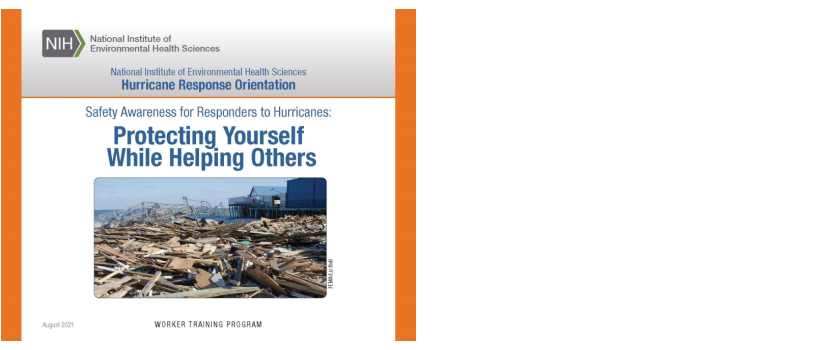
Hurricane and Floods Resources
Protect the health and safety of individuals who are responding to the aftermath of a hurricane or a flood. Visit the Responder & Community Resilience Page for additional resources on mental health and resiliency.
-
%20(3).png)
Video Highlighting WTP Disaster Materials and Booklets
Stay safe, healthy, and injury-free during hurricane season with NIEHS Worker Training Program (WTP) resources. WTP offers training tools, fact sheets and booklets on hurricanes, floods, mold and debris clean-up.
What's New
Evaluation of the Small Business Innovation Research (SBIR) E-Learning for HazMat Program(379KB) 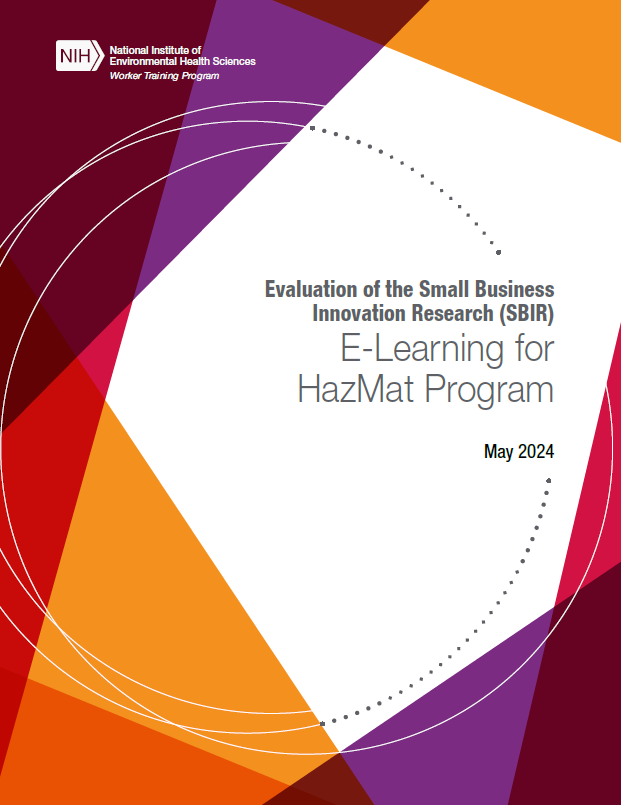

The WTP SBIR E-Learning for HazMat Program supports the development of technologies and applications that focus on occupational safety and health training for hazardous material workers, emergency response, and skilled support personnel. The new evaluation report describes the challenges and successes of the program and provides recommendations on how to improve it in the future.
Additional Resources
- COVID-19 Resources
- Ensuring Worker Safety and Health in the Aftermath of Disasters(738KB)
- Mitigating the Impact of Climate Change and Securing Environmental Justice through Safety and Health Training (2 pages)(185KB)
- Mitigating the Impact of Climate Change and Securing Environmental Justice through Safety and Health Training (4 pages)(522KB)